
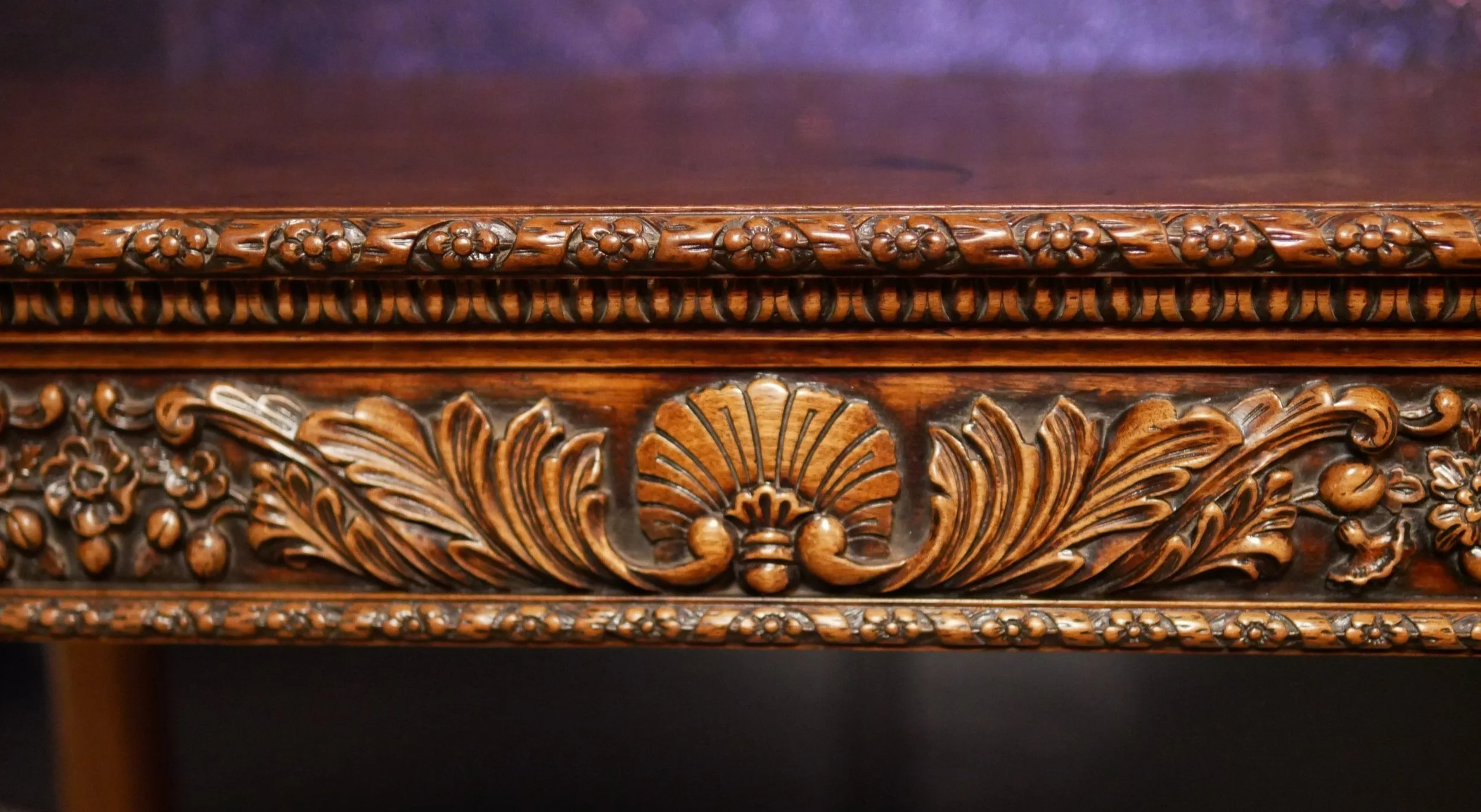
GEORGE II CUBAN MAHOGANY CENTRE TABLE £160,000
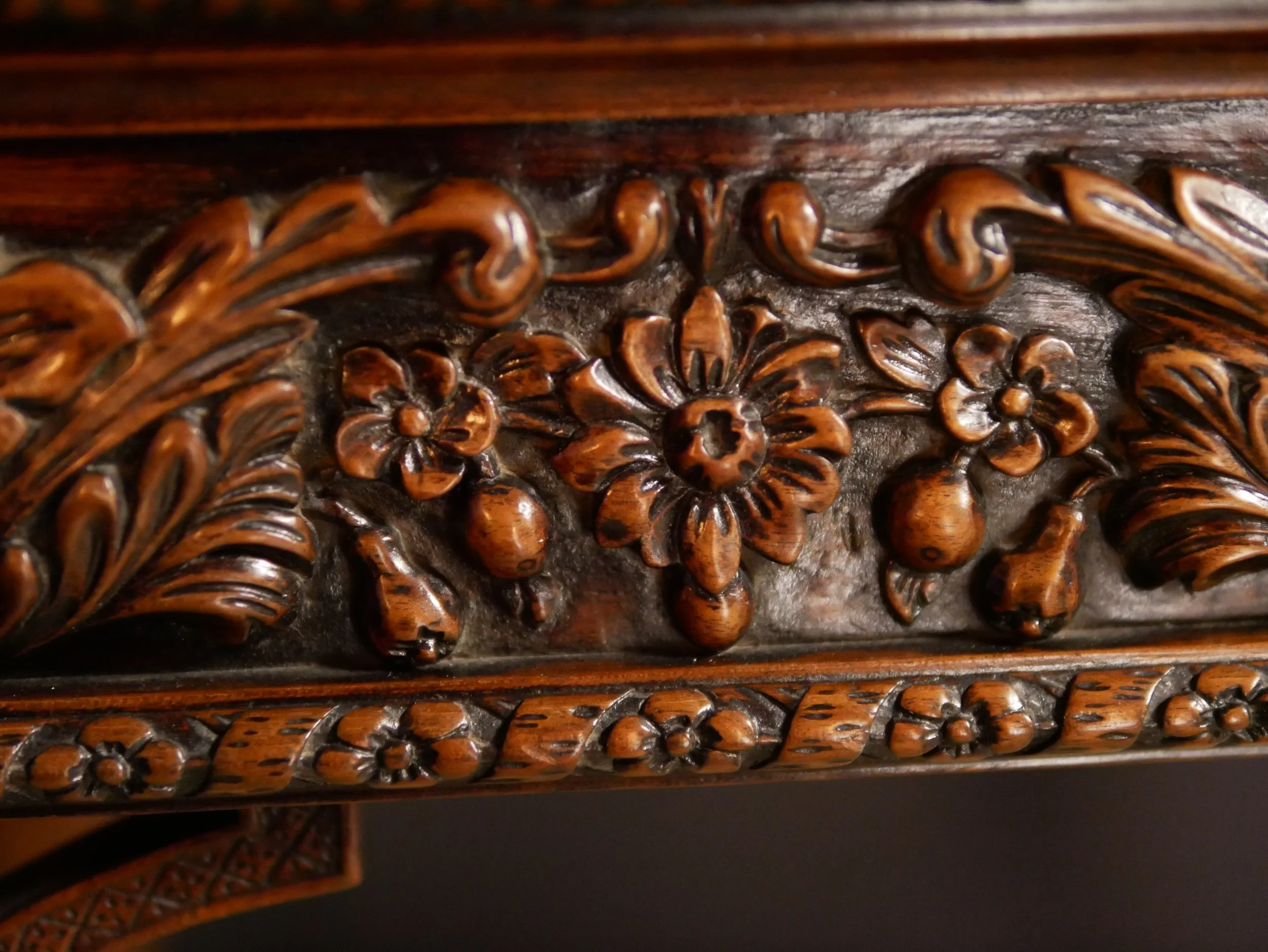
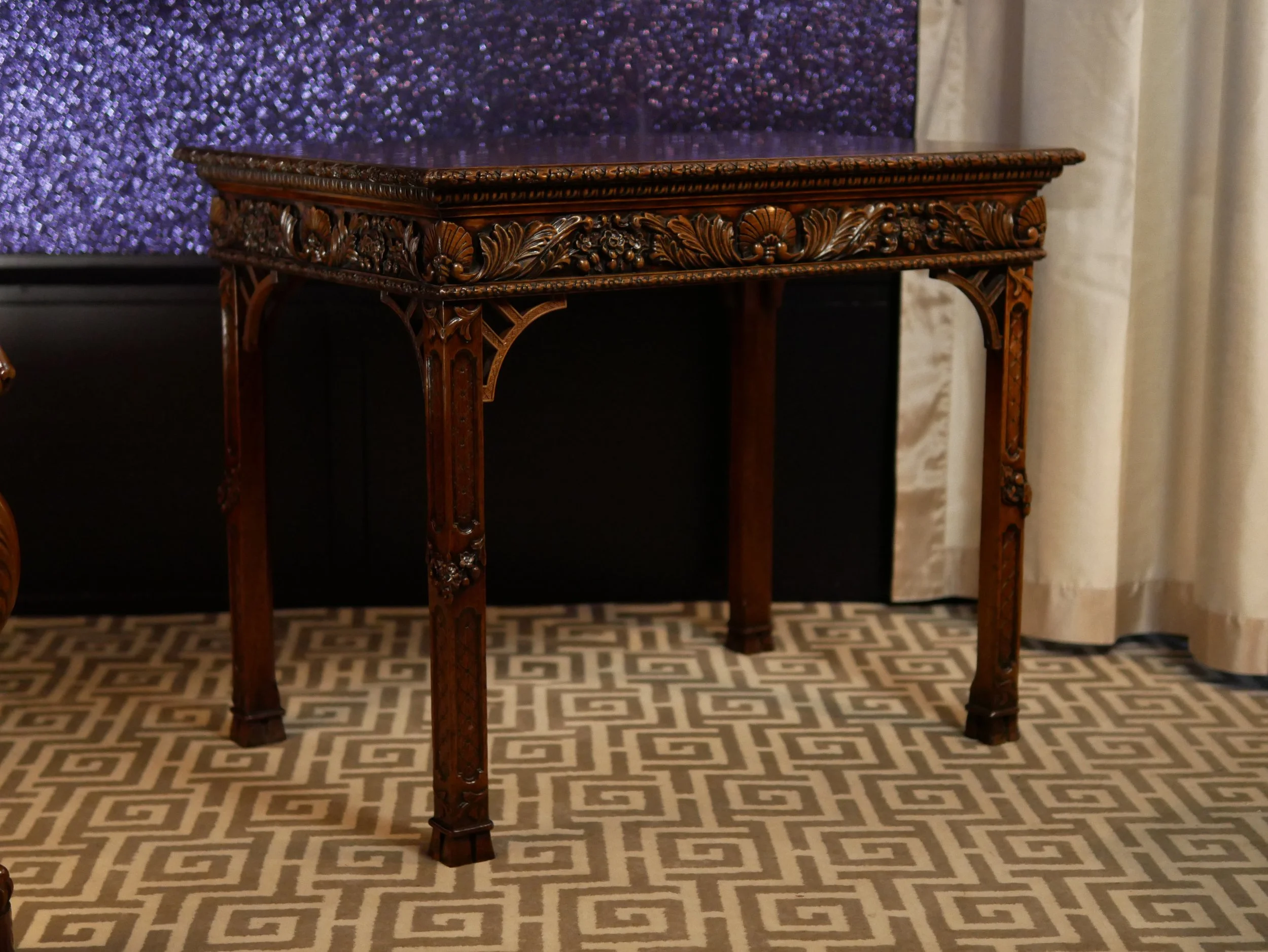
A GEORGE II CENTRE TABLE ATTRIBUTED TO WILLIAM HALLETT AND POSSIBLY MADE FOR RAYNHAM HALL, NORFOLK, CIRCA 1740.
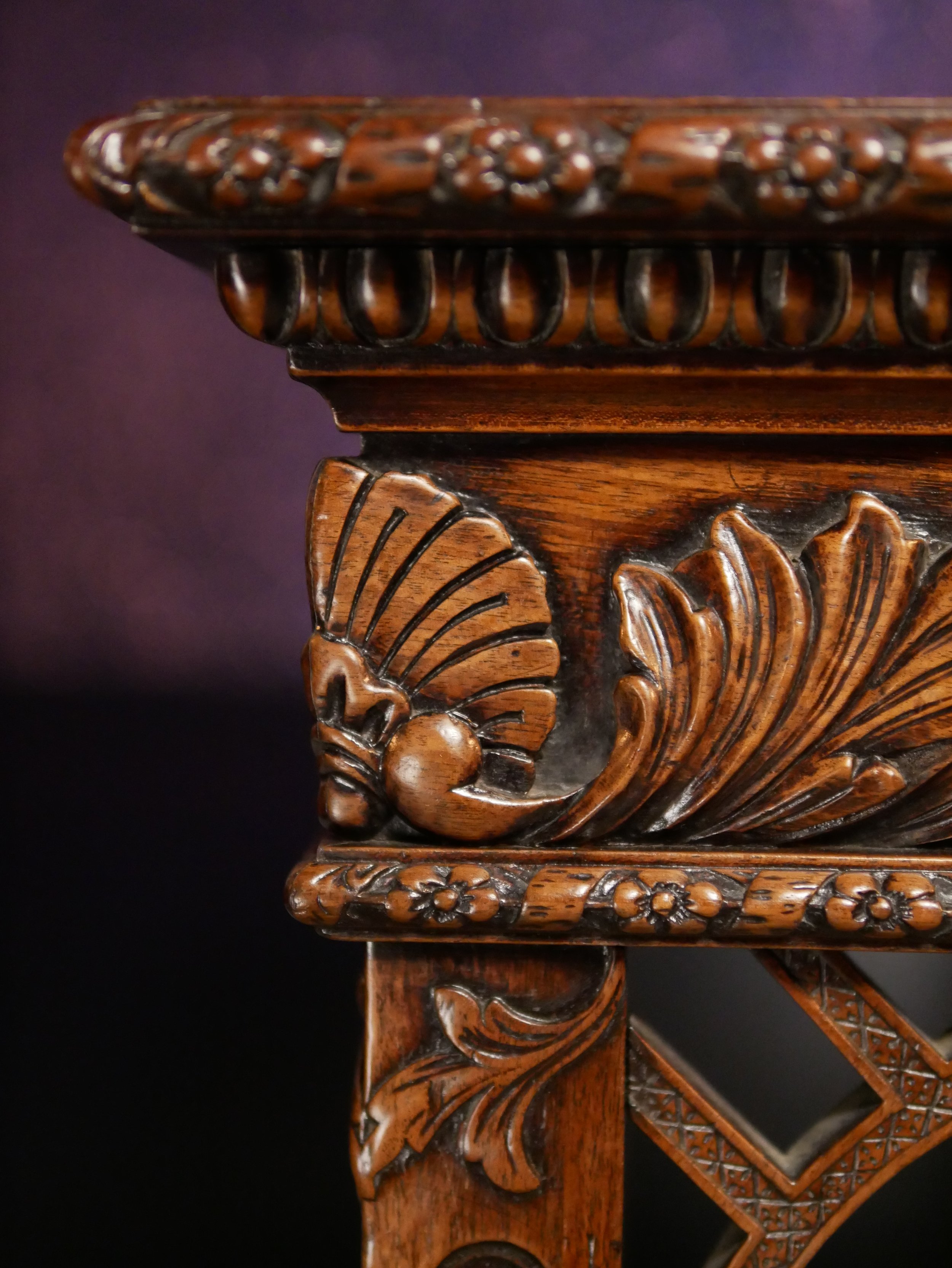
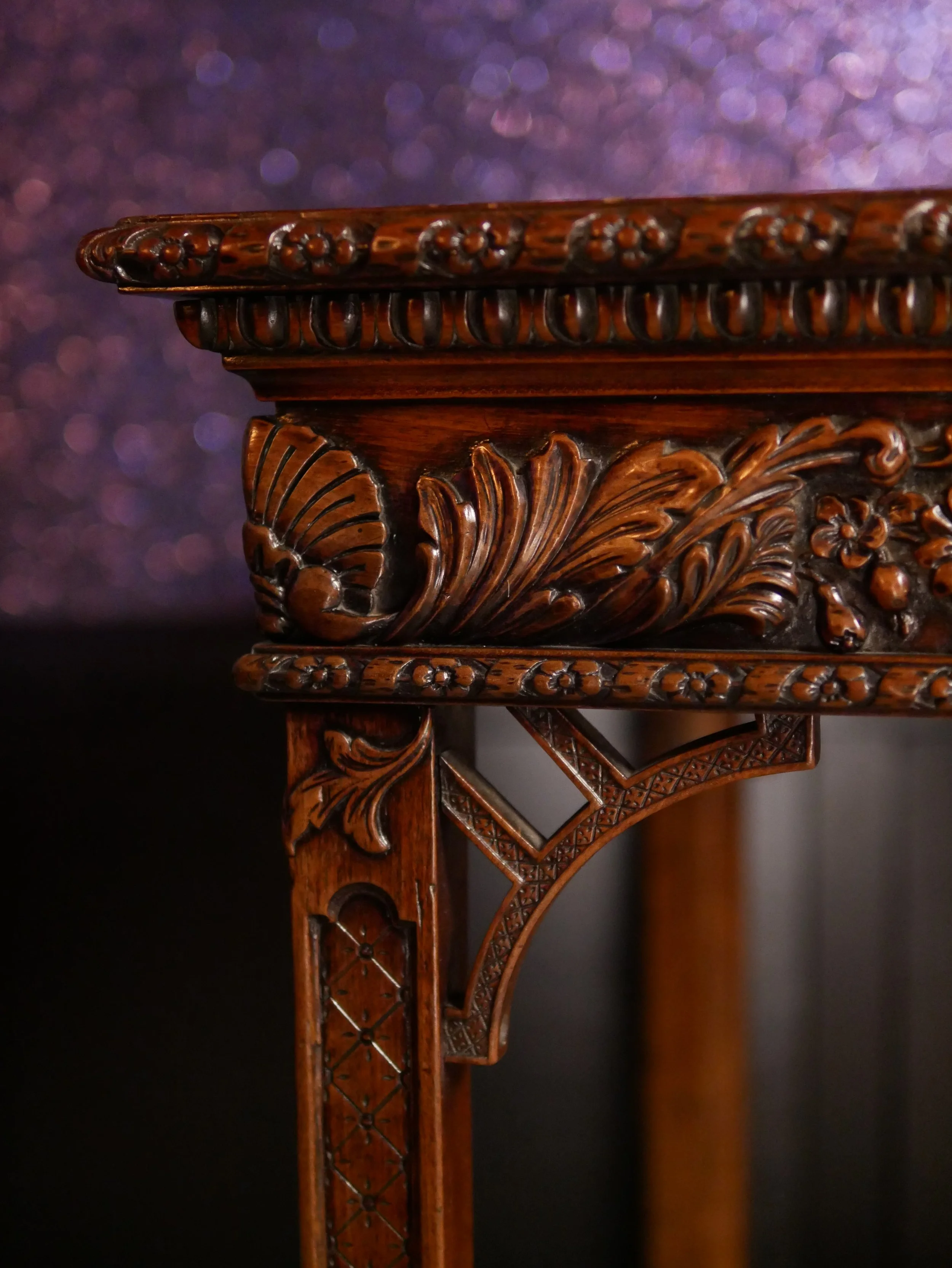
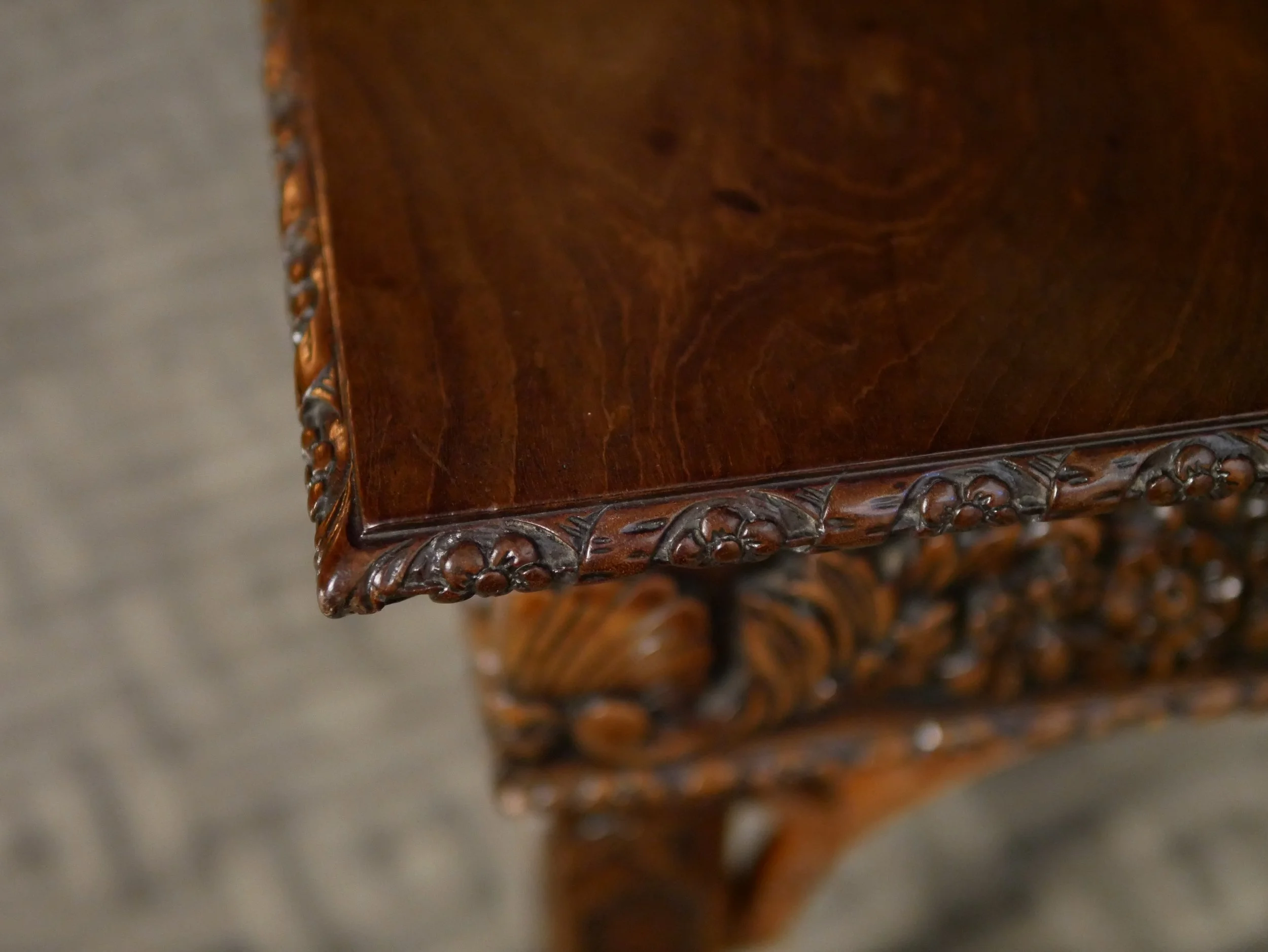
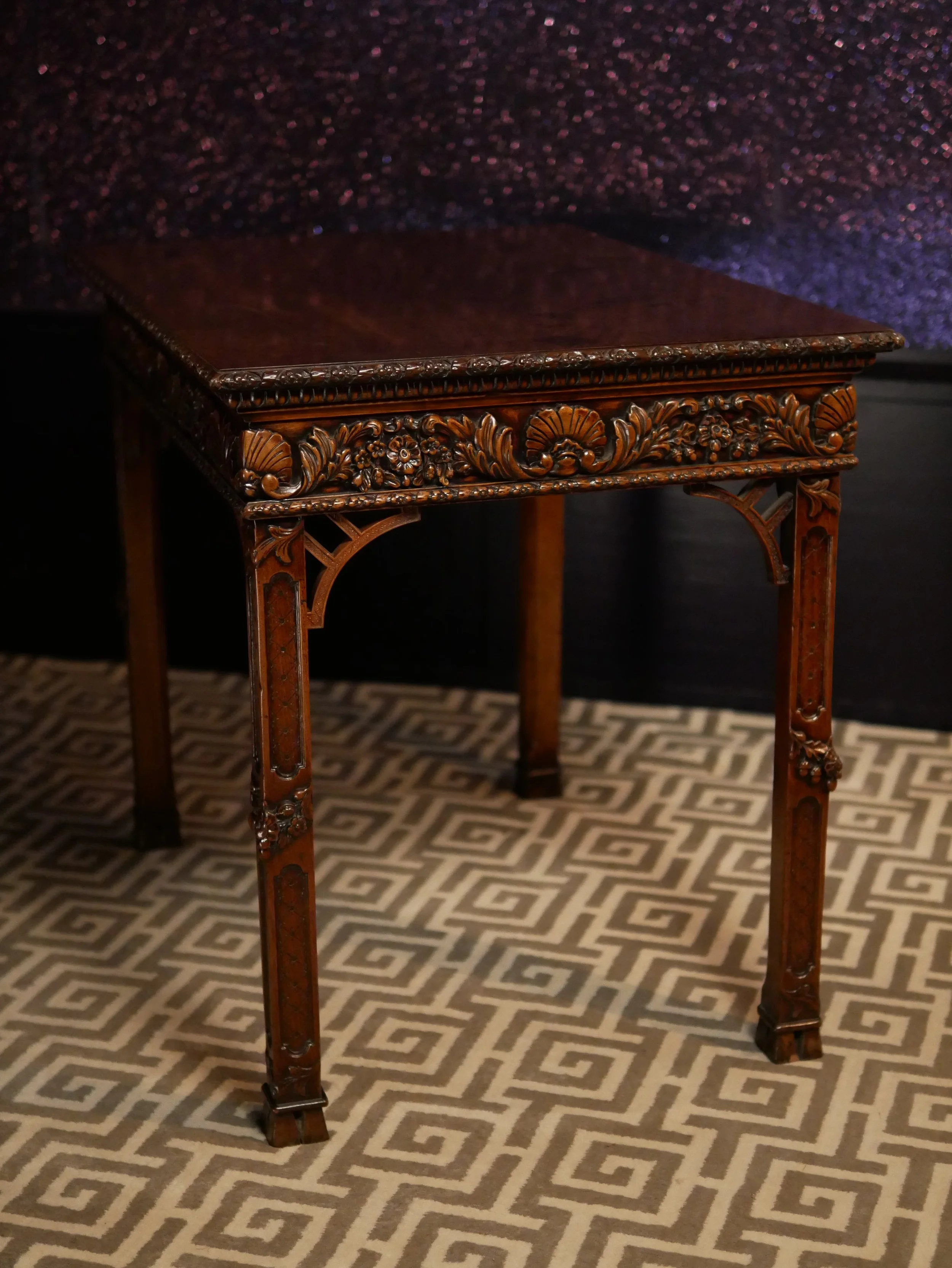
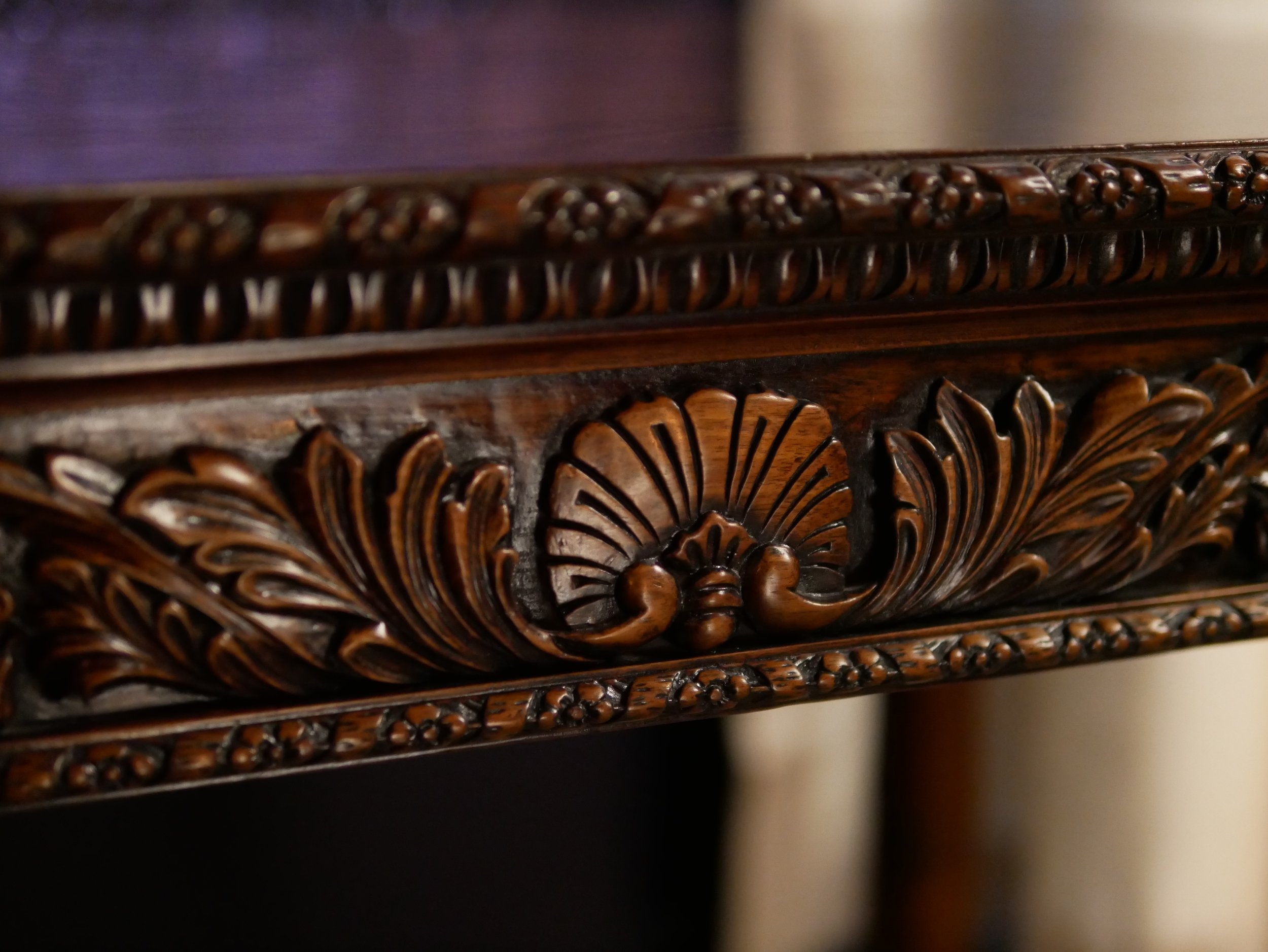
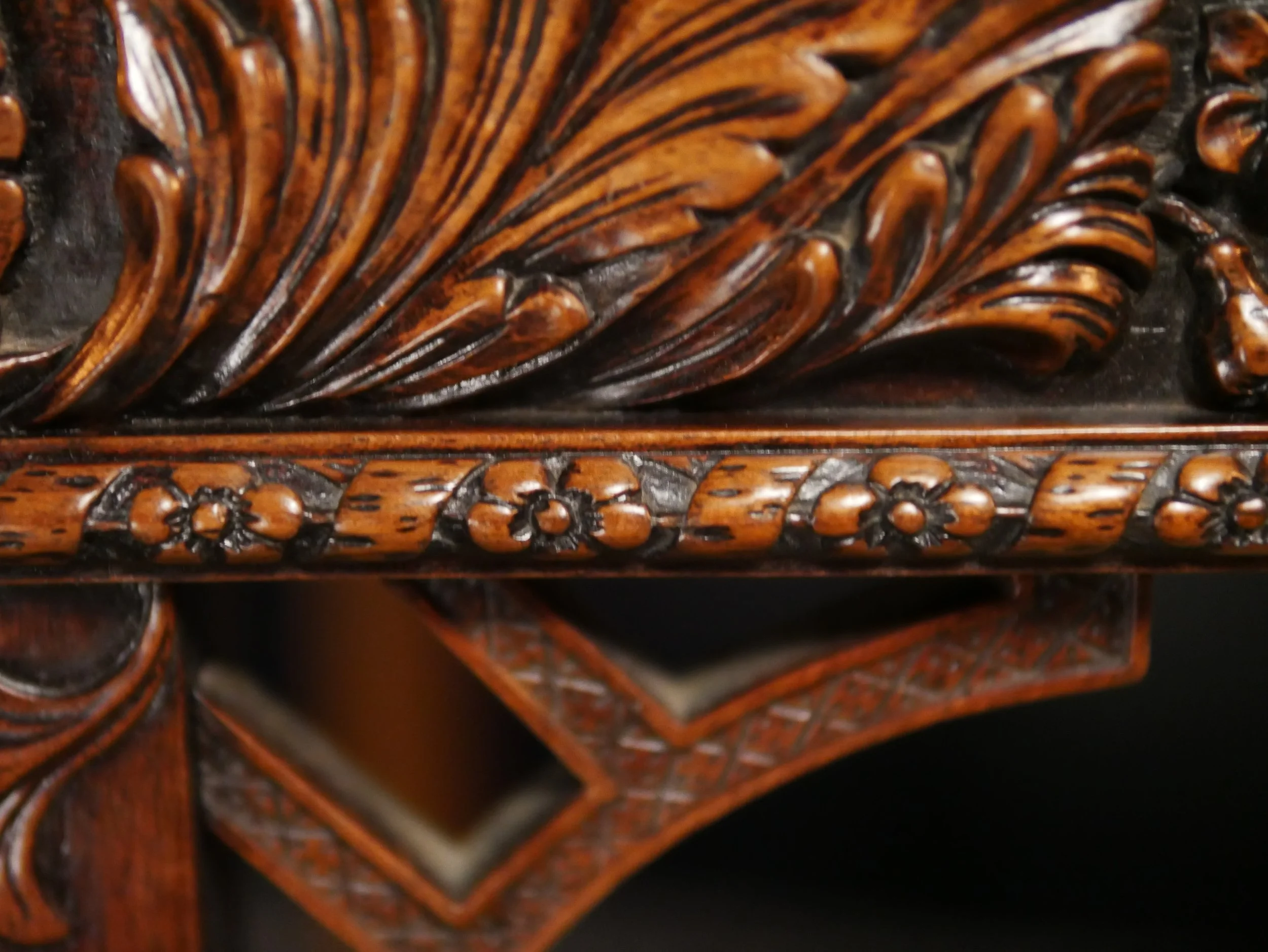
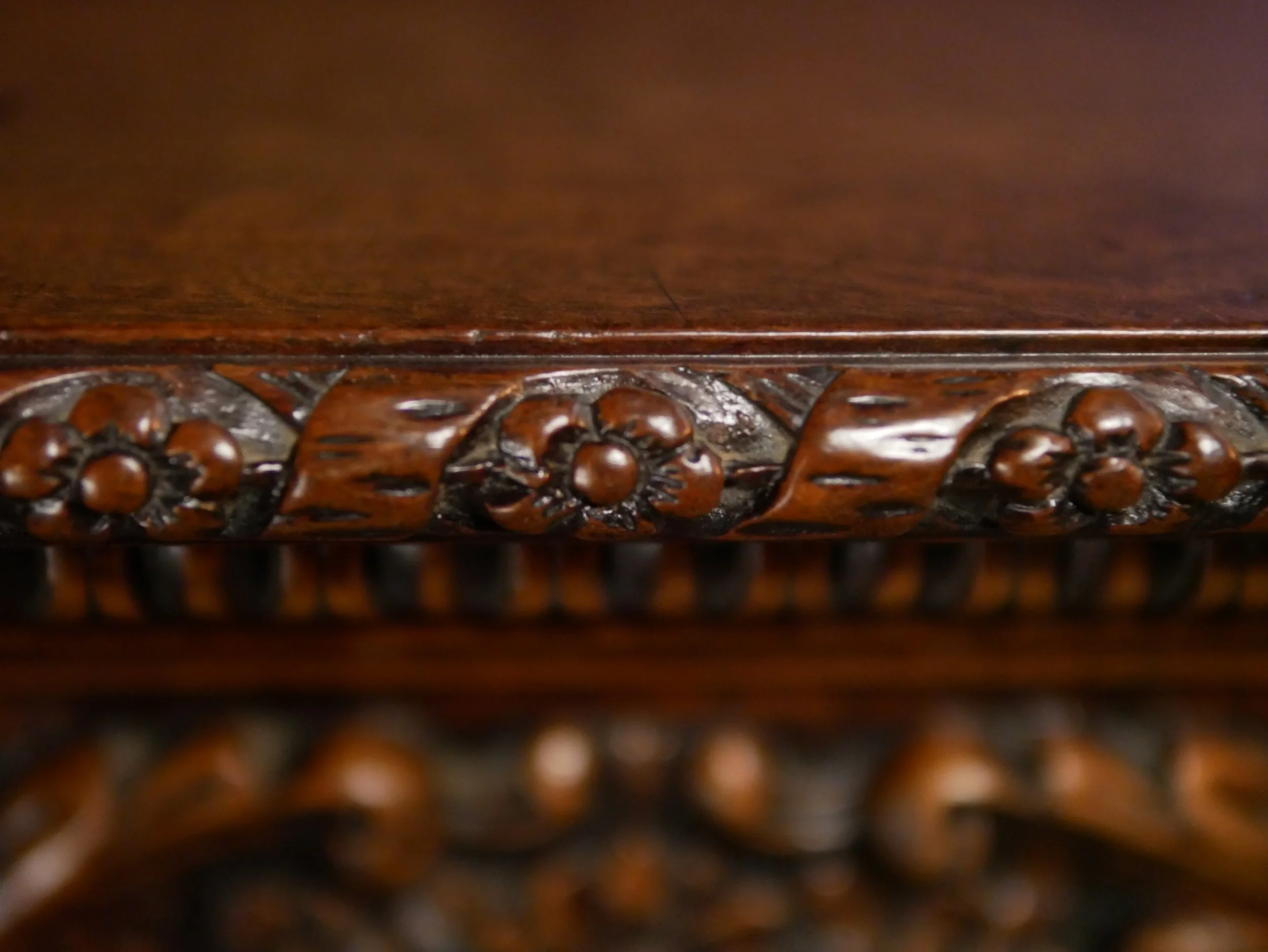
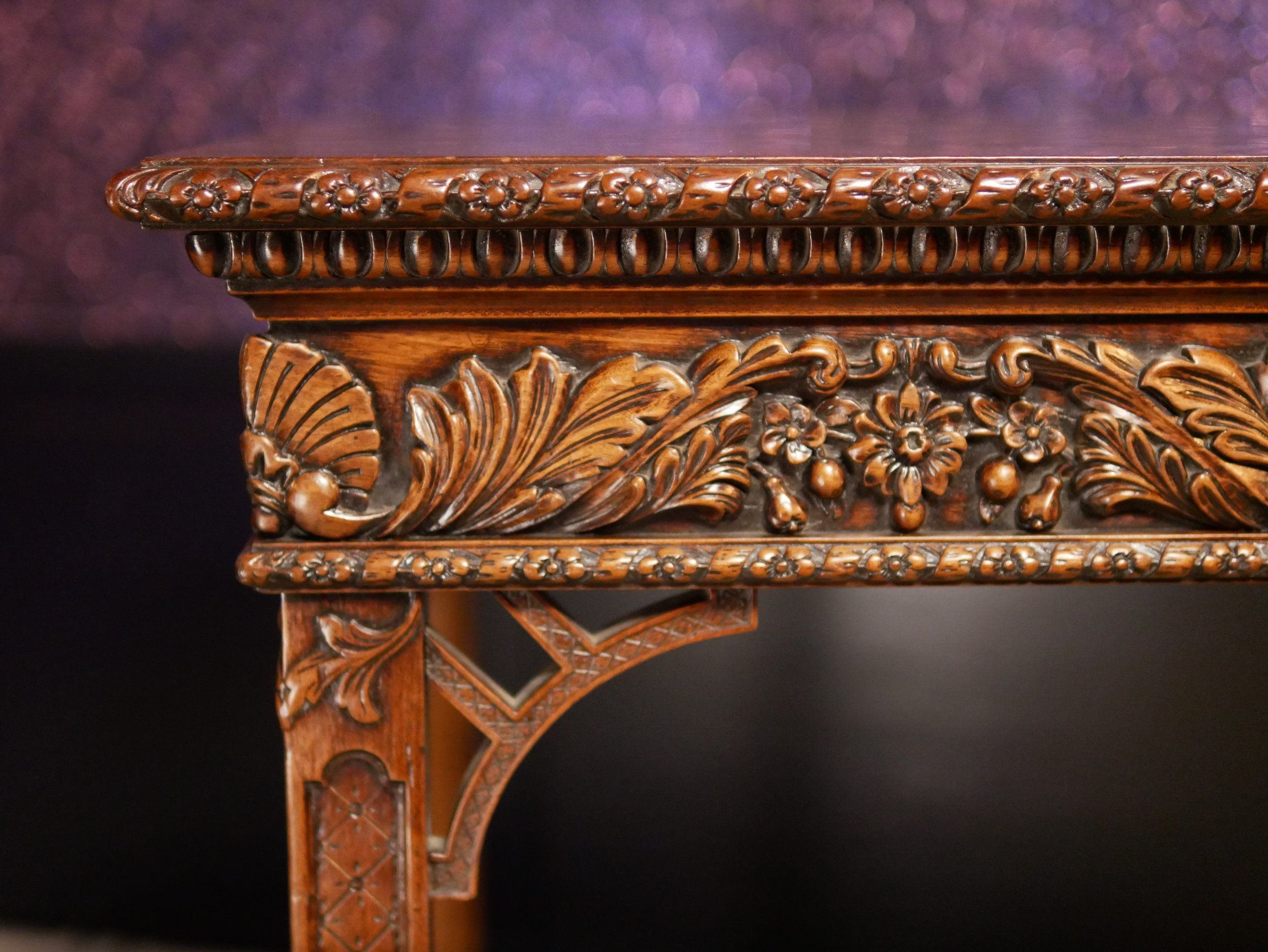
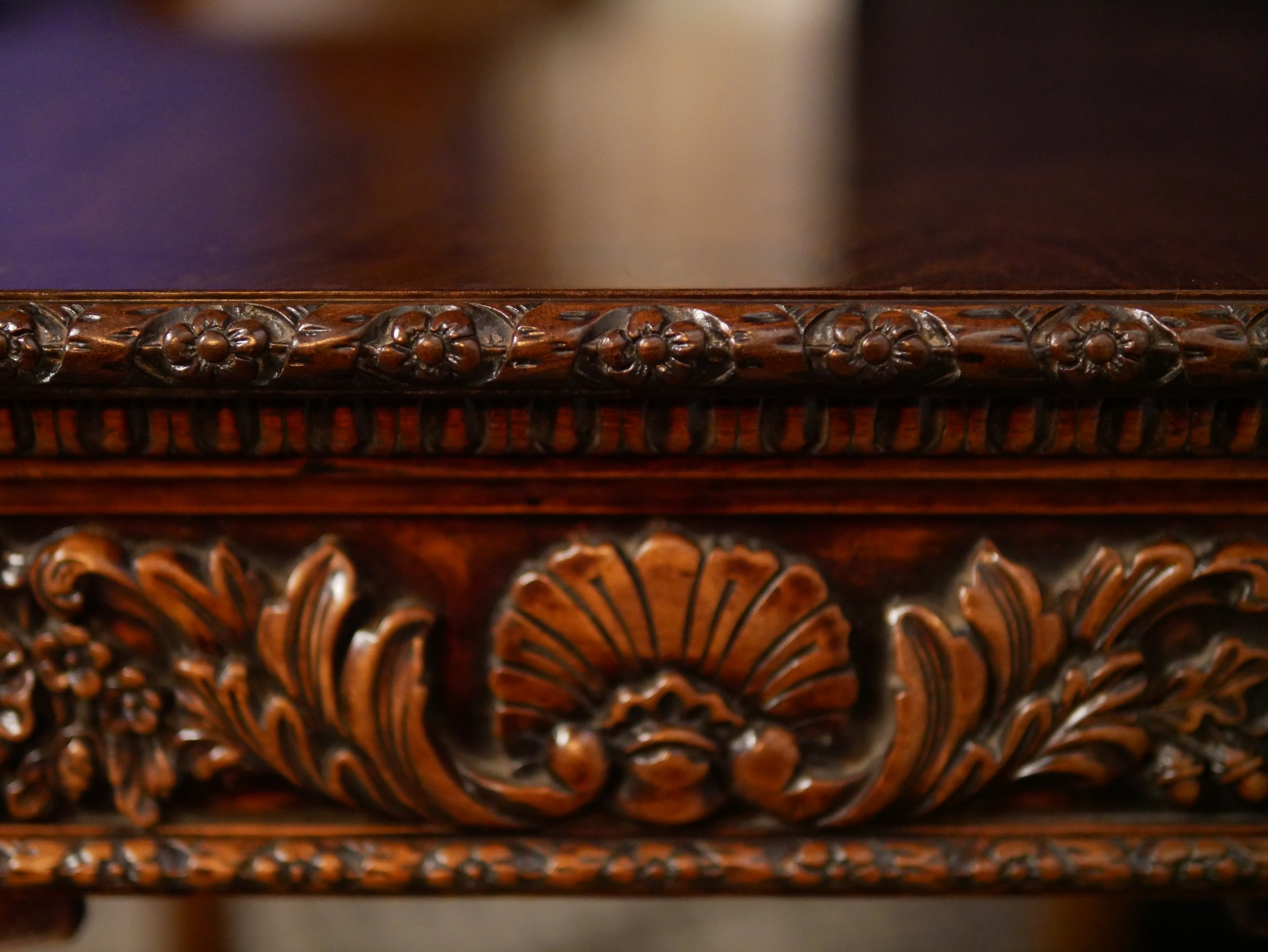
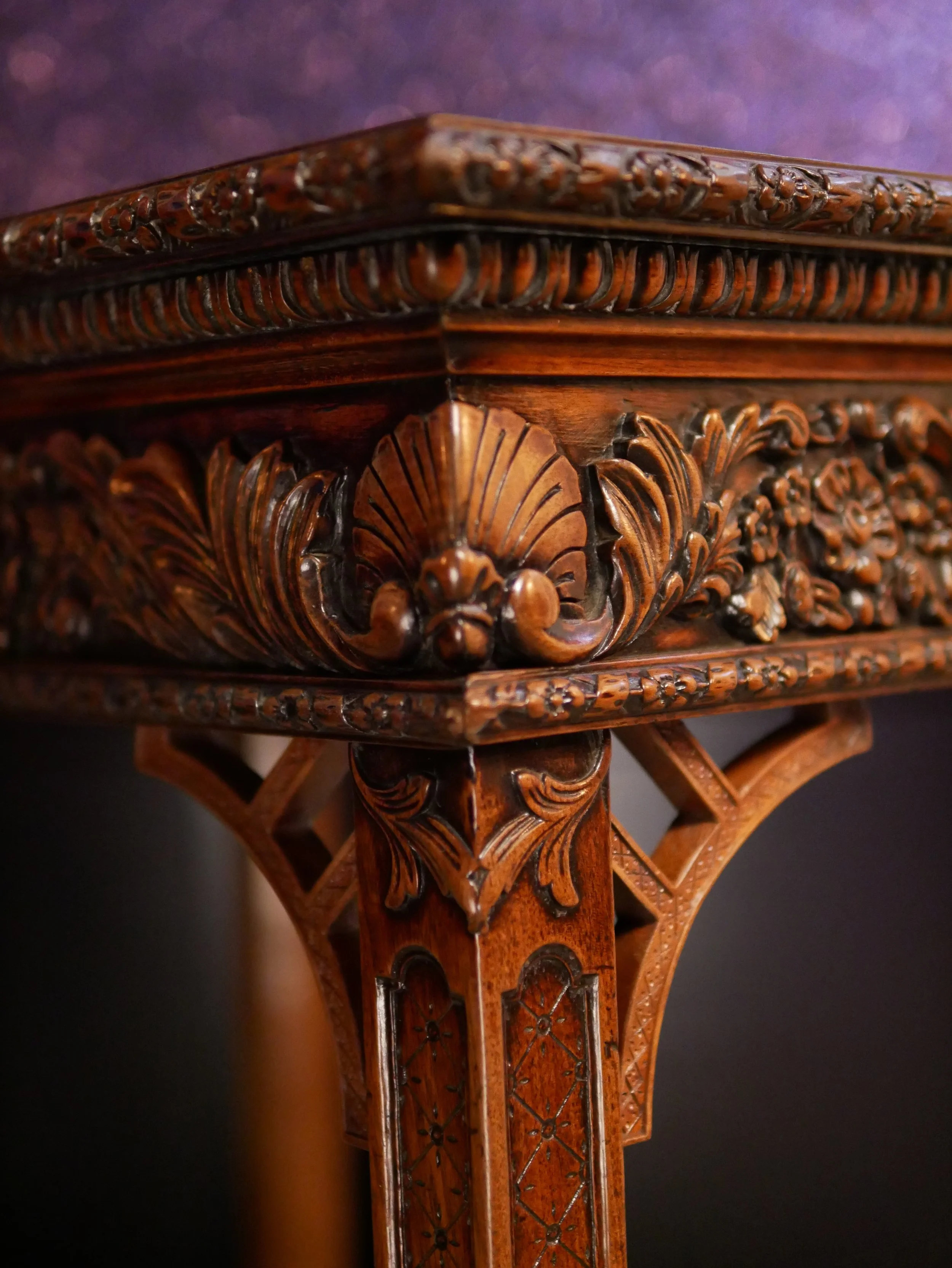
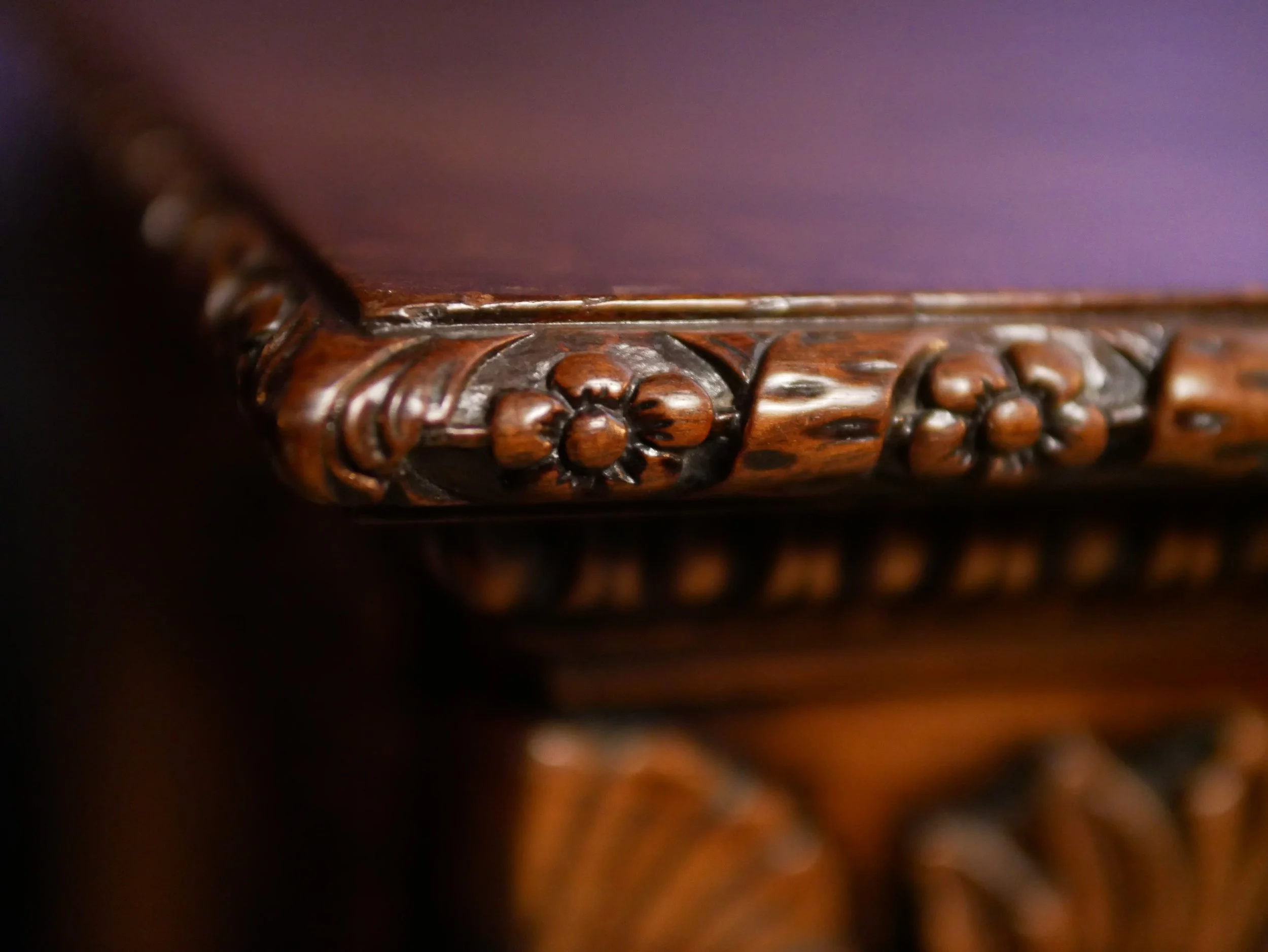
A solid dense Cuban Mahogany rectangular top, surmounted with a carved flower head moulding, which hangs over a crisp egg and dart and concave moulded support.
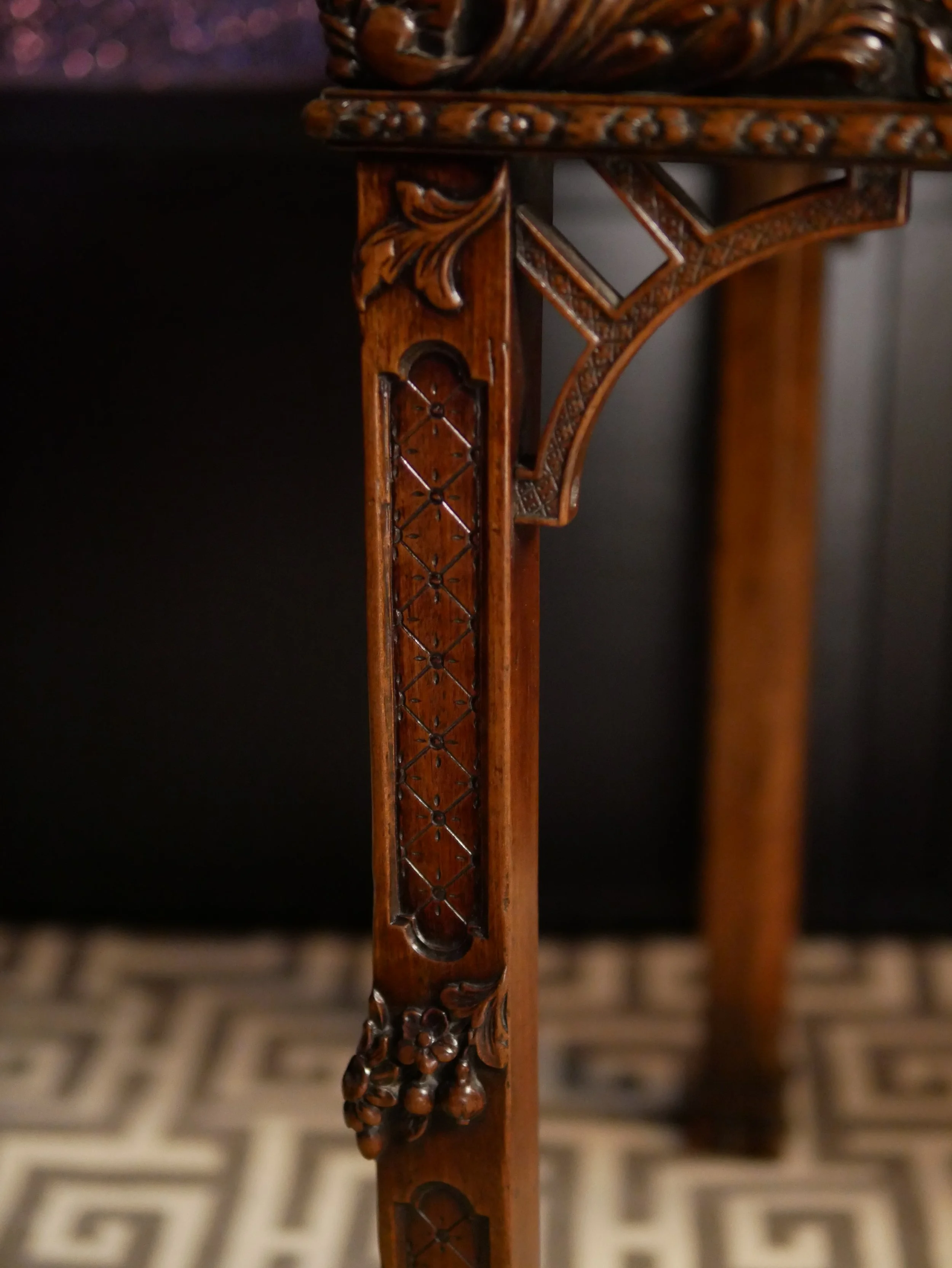
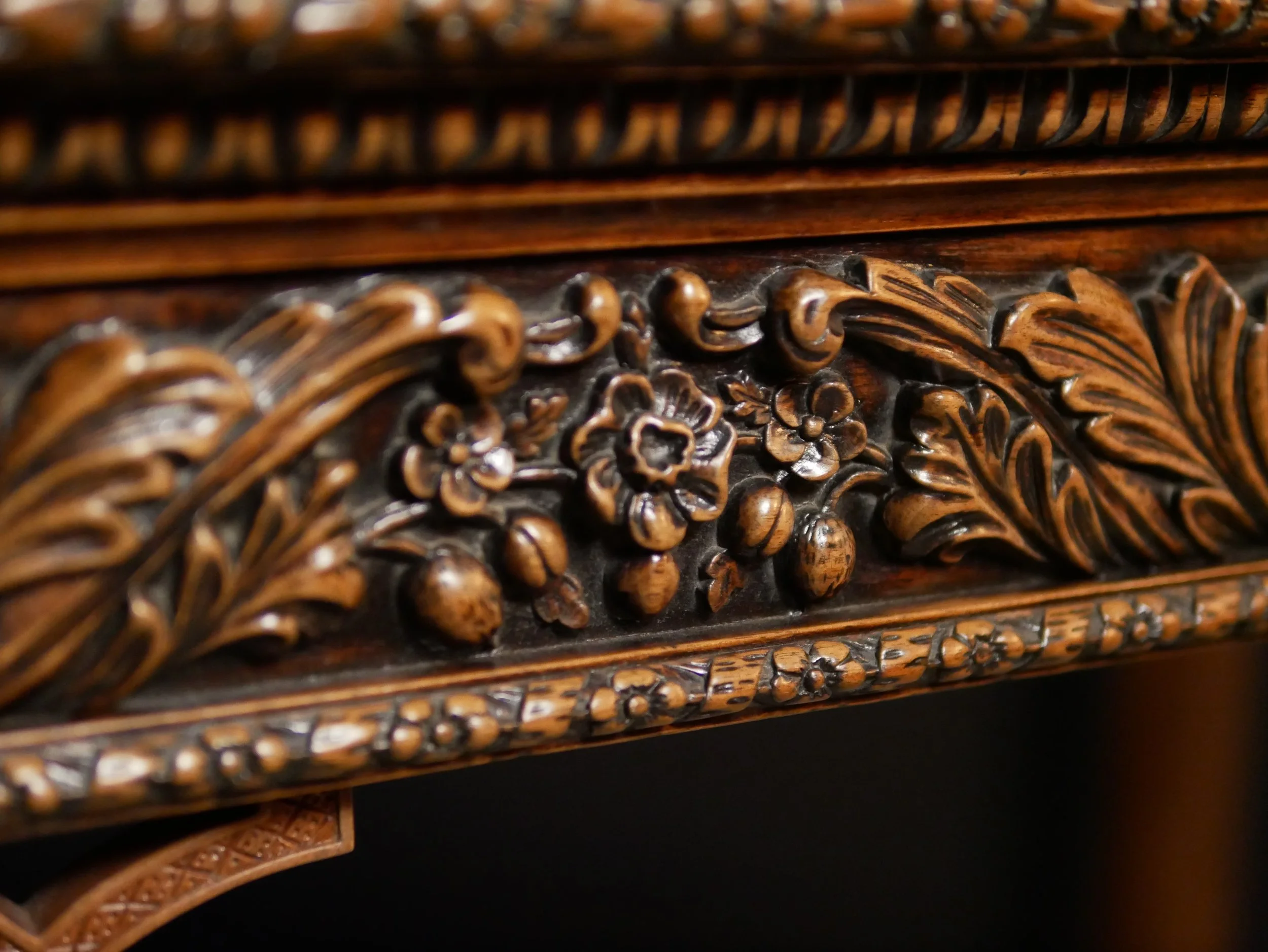
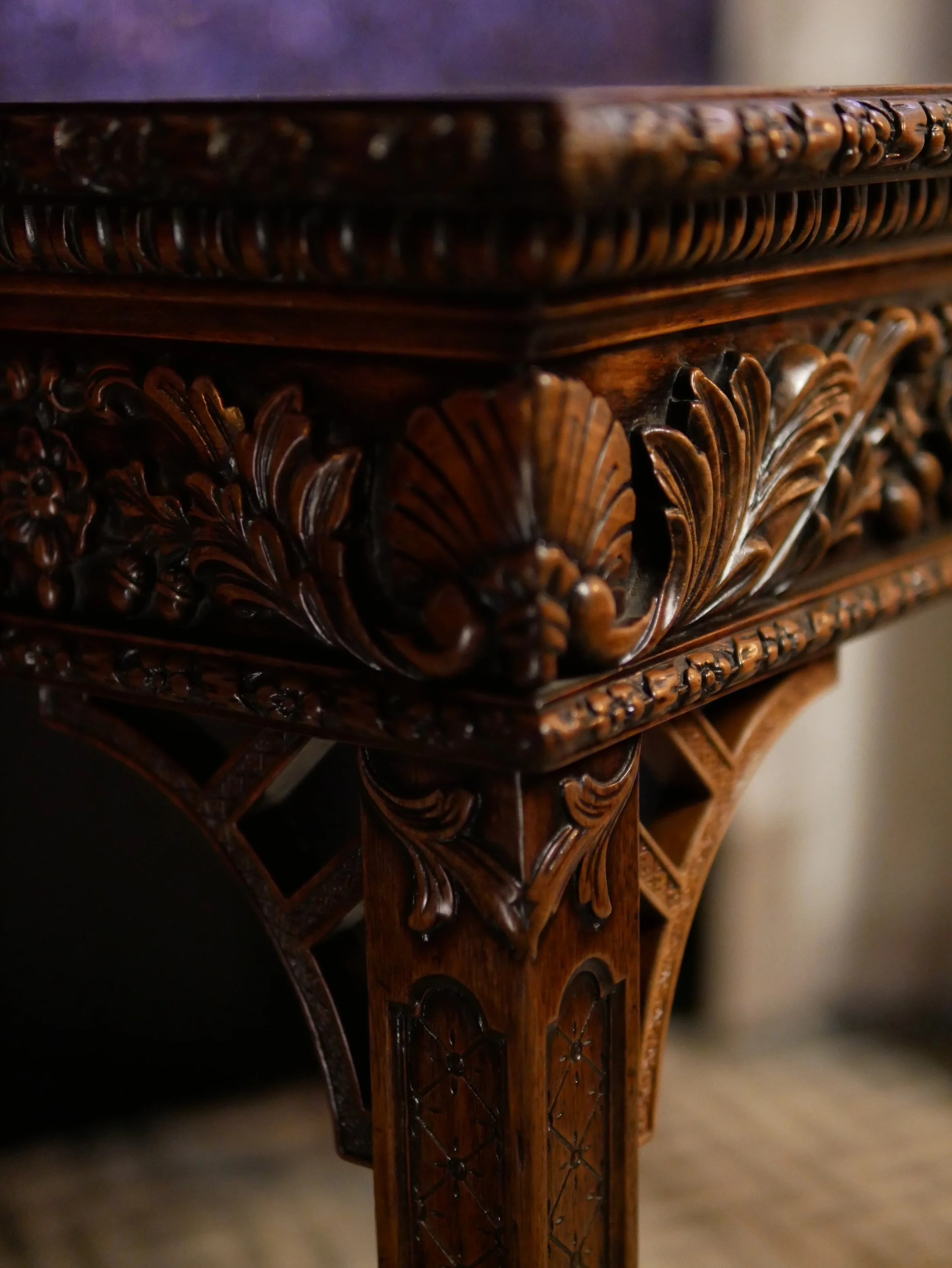
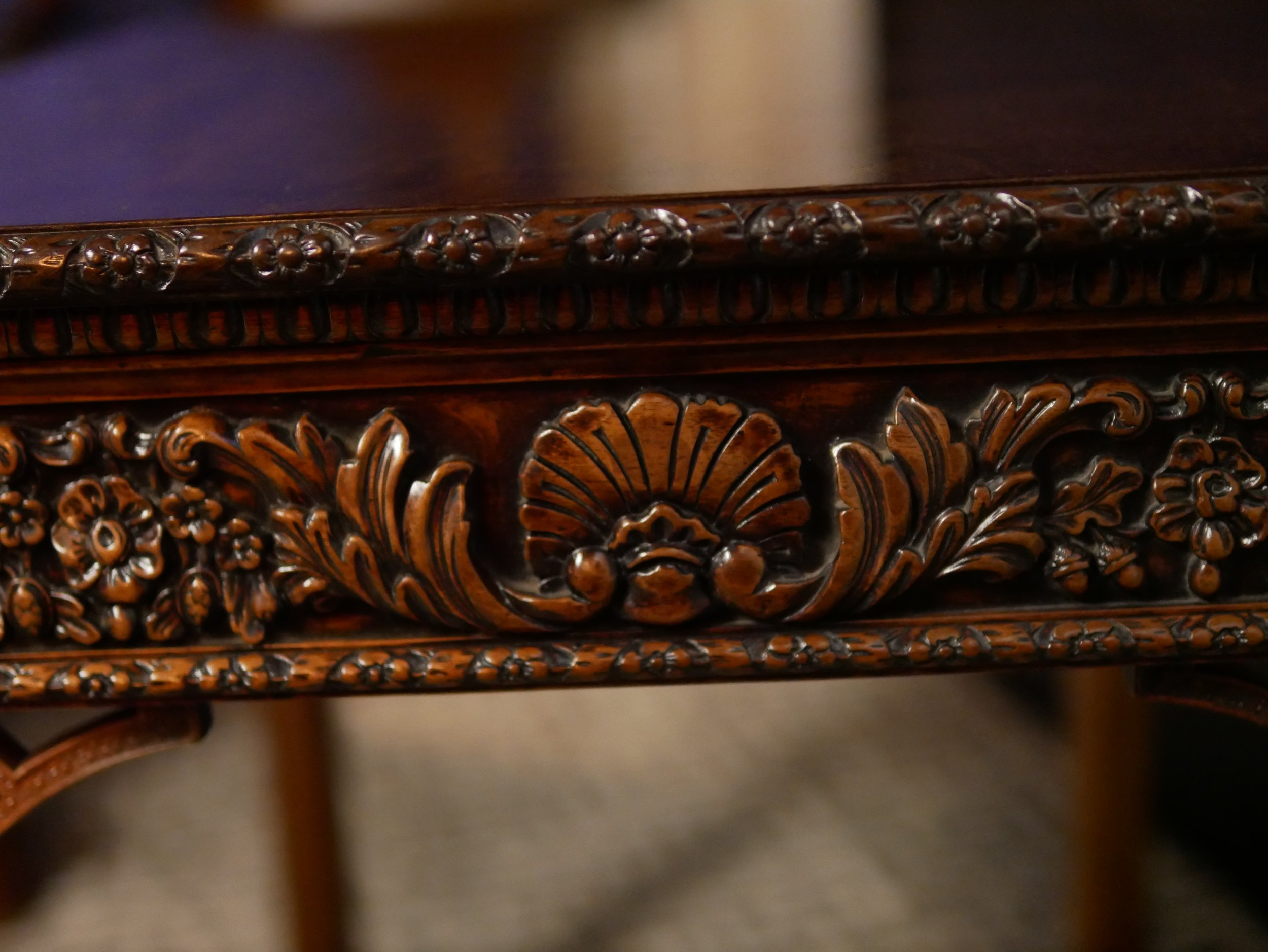
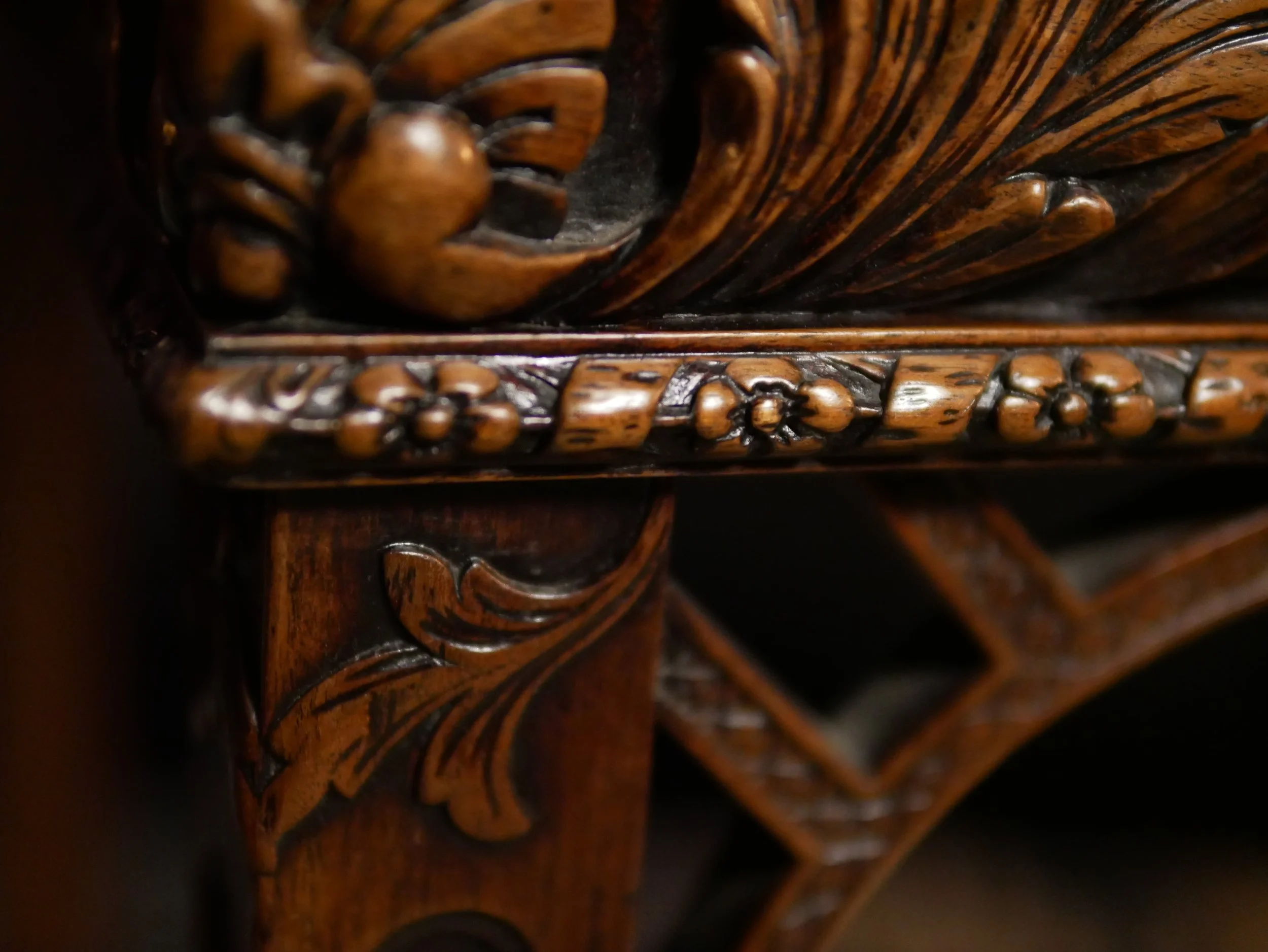
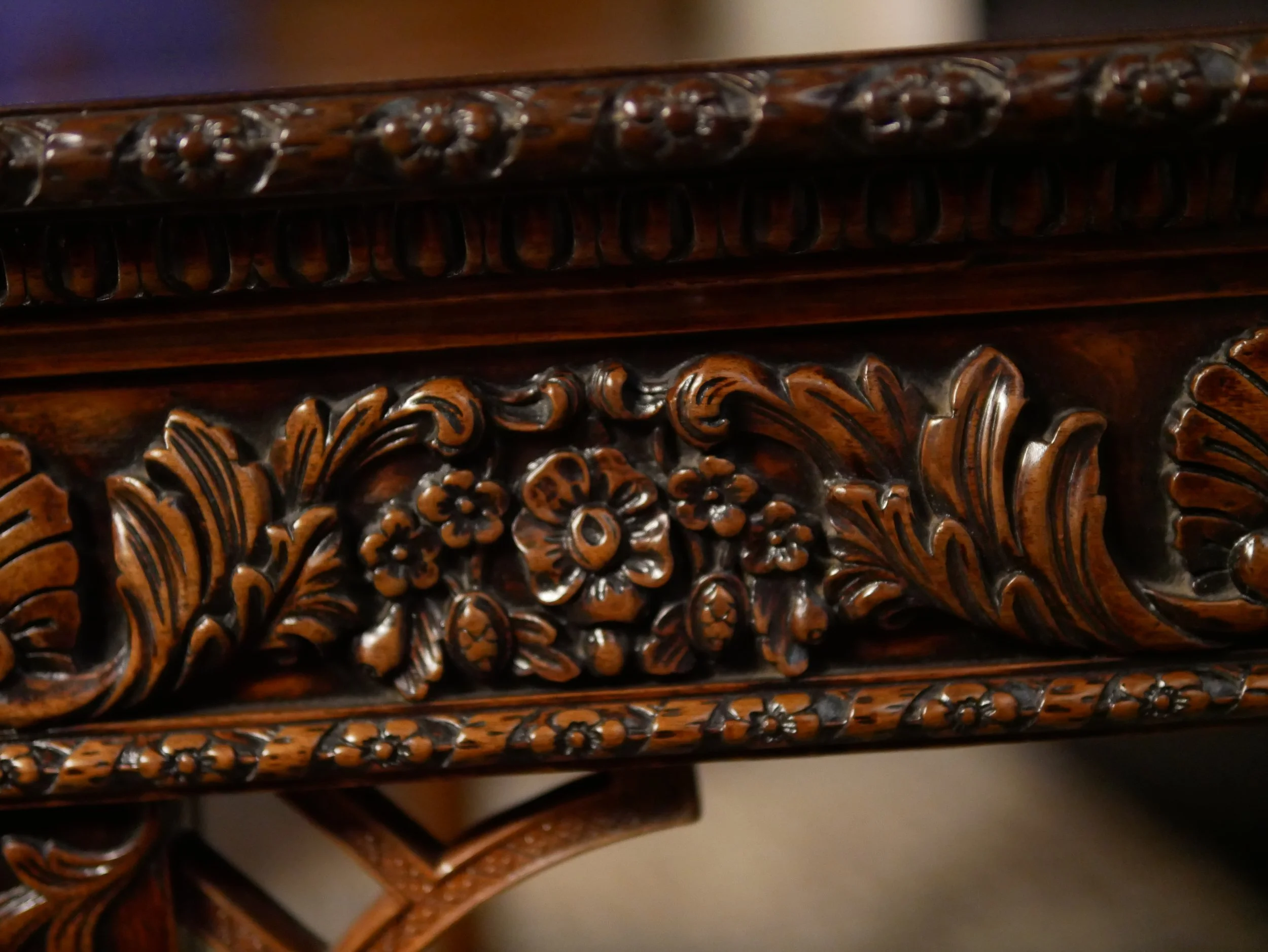
The four-sided apron is carved with a series of berries, fruit and nuts, (which are matched and duplicated on the knees of the legs), with shells in the centre of each panel and all corners, and a second smaller flower head moulding surrounding its base.
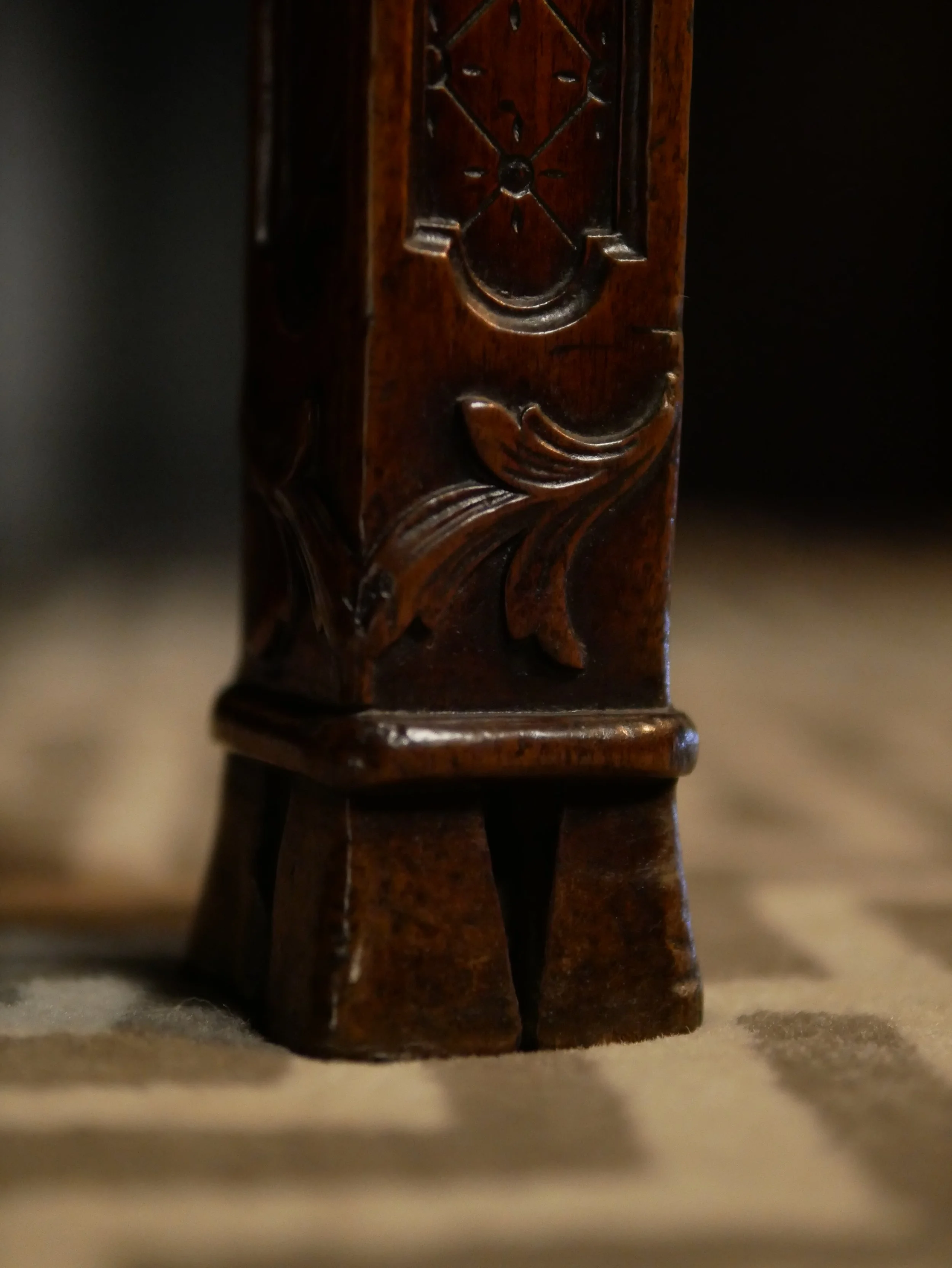
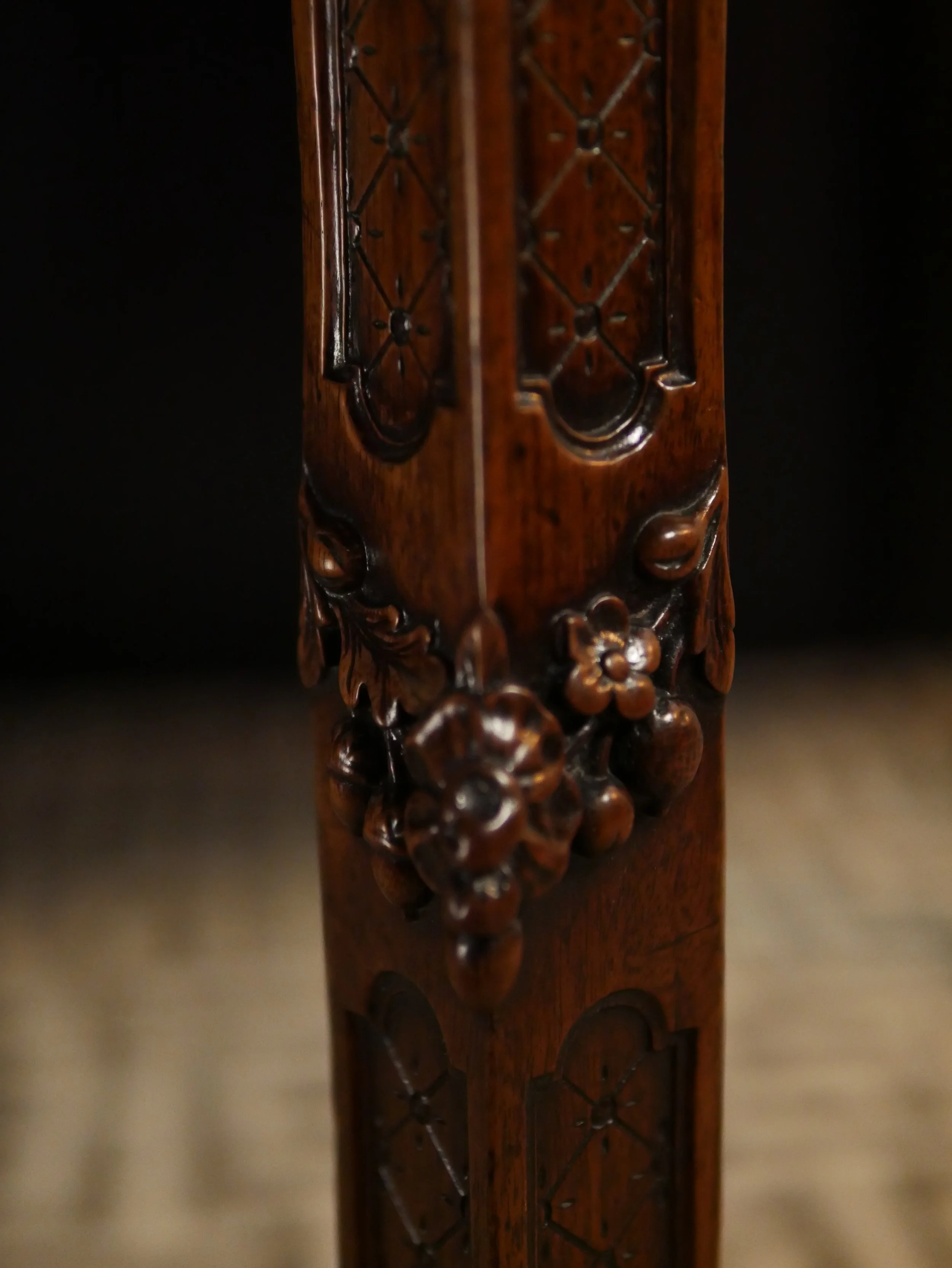
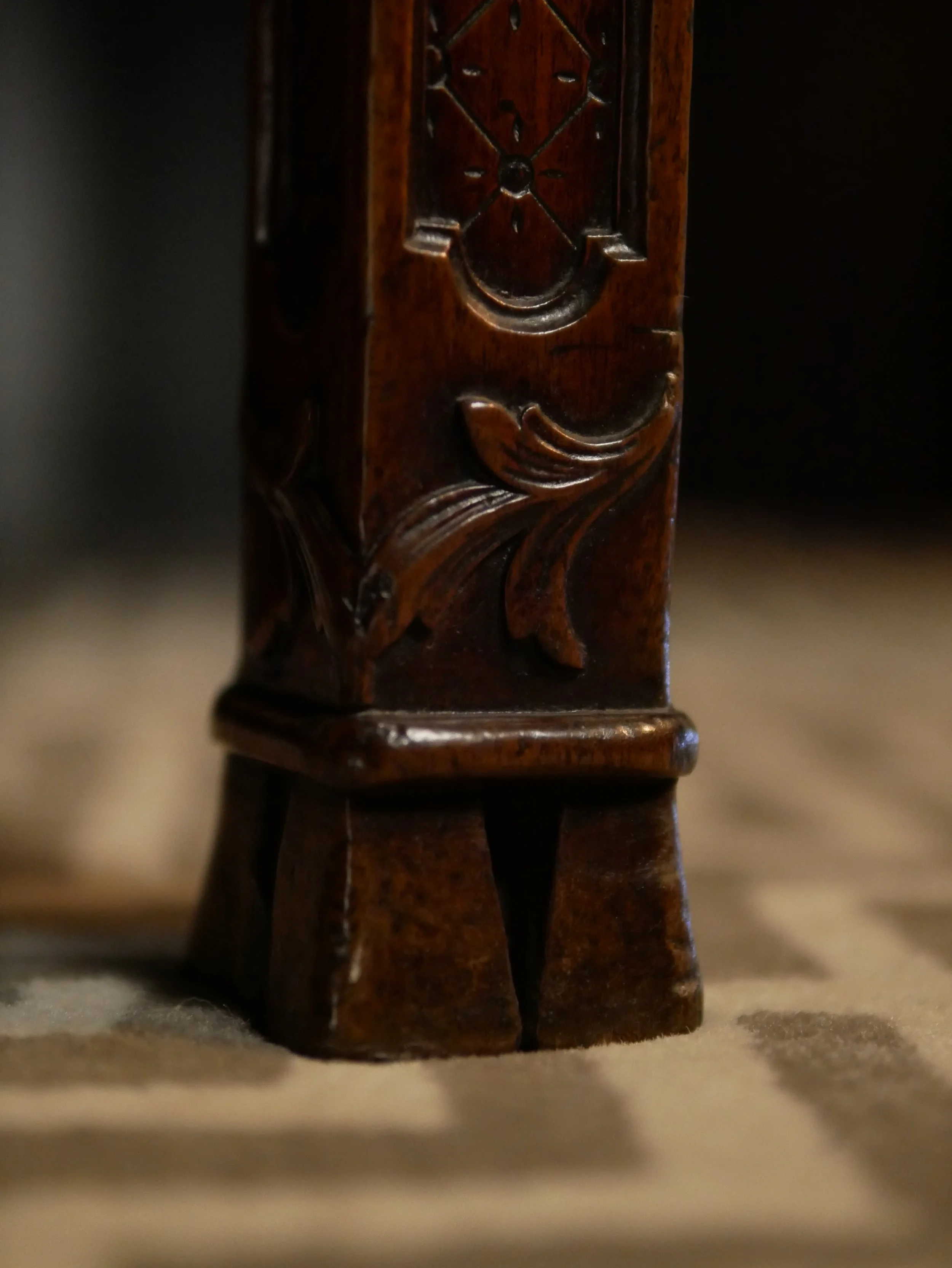
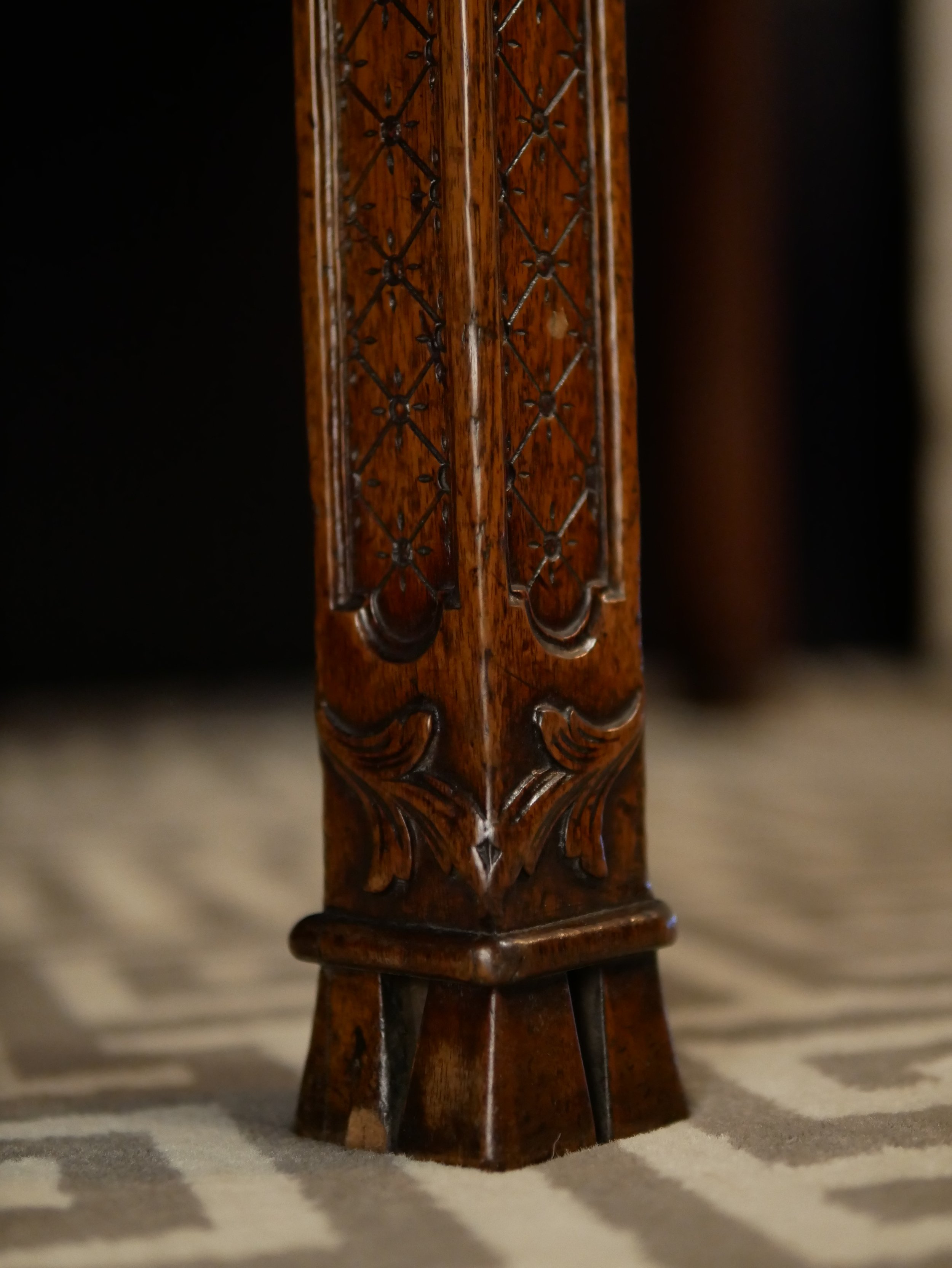
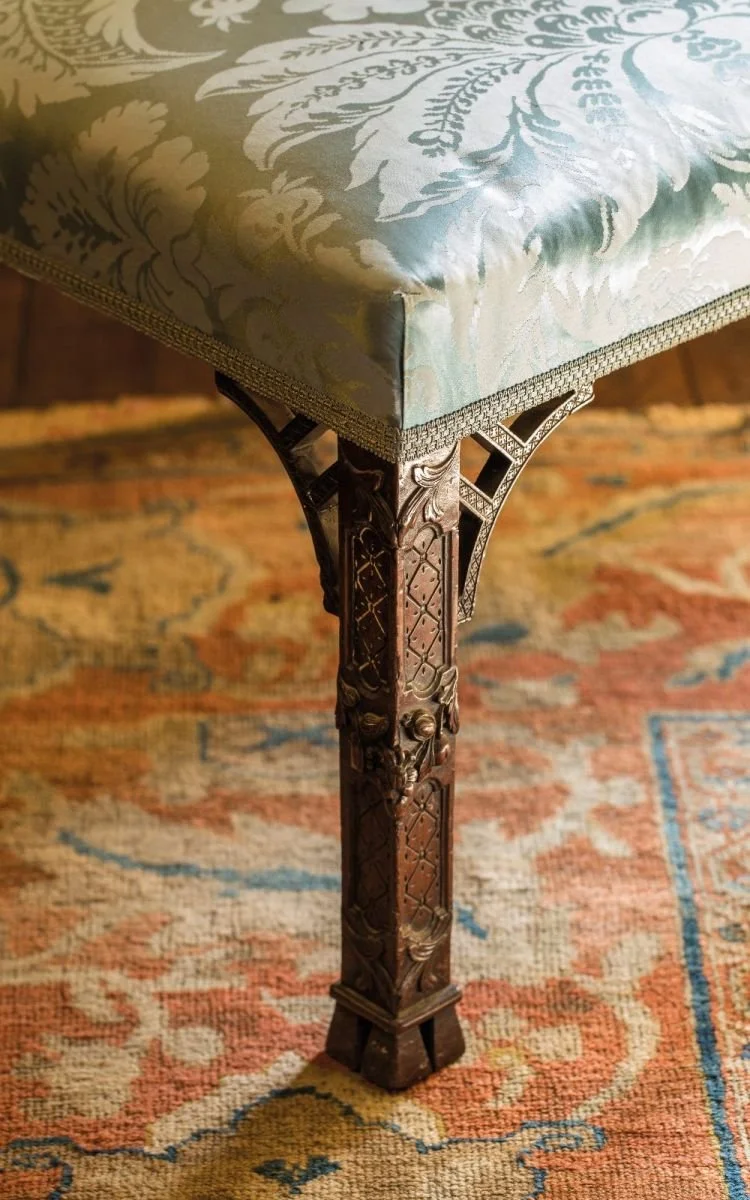
The four square legs, garlanded with flowers, and with conforming trellis panels, are headed by pierced Chinese angle brackets on guttae feet. (Four of these brackets are later replacements).
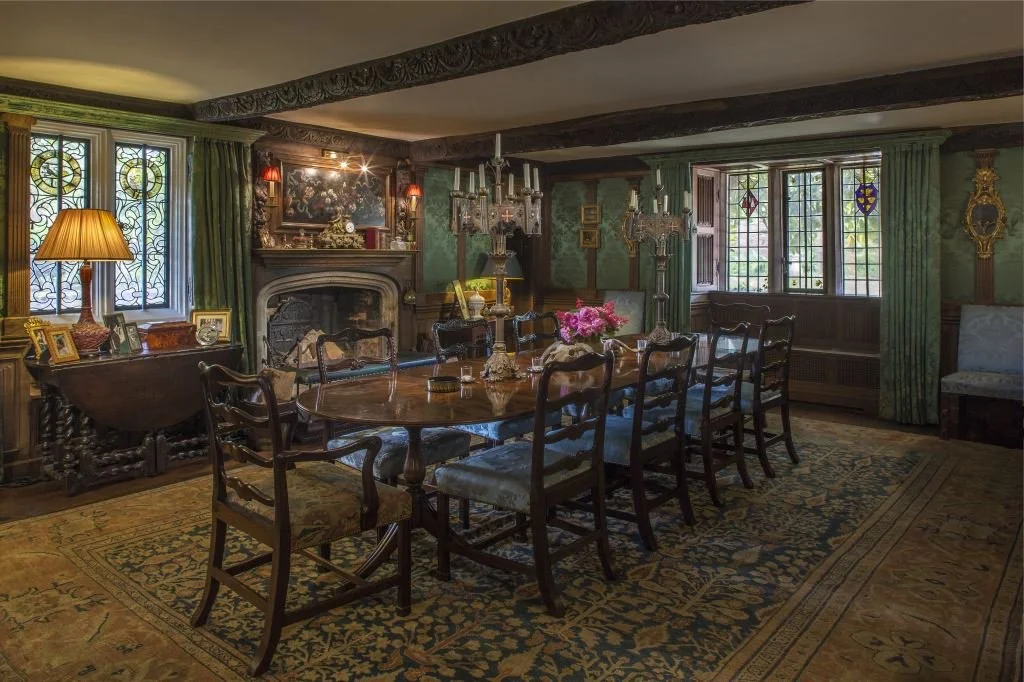
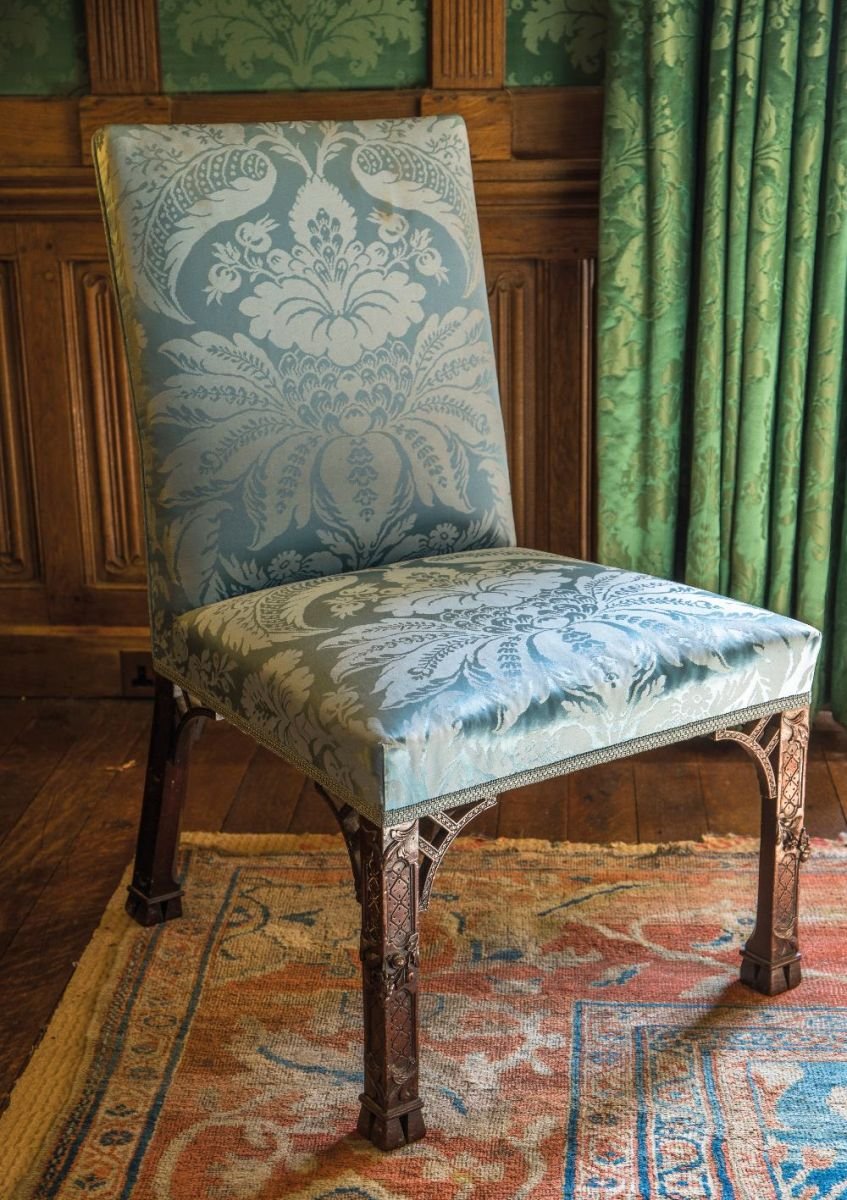
Seen here, the matching chairs from Raynham Hall Norfolk, in situ at Athelhampton Manor, Dorset.
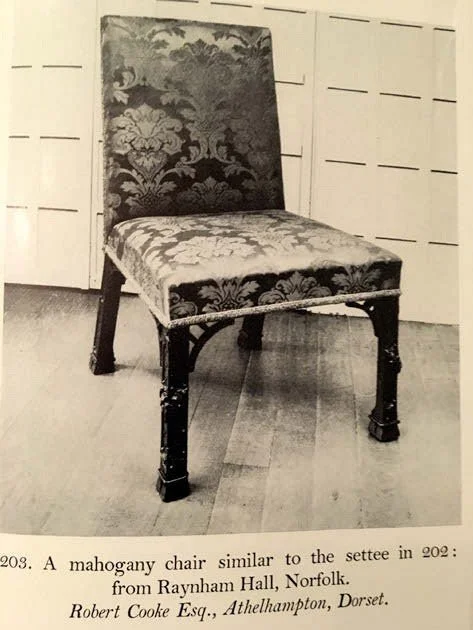
Below is a black and white image of the side chair in the manner of William Vile, as pictured in ‘The Works of Thomas Chippendale and his Contemporaries in the Rococo Style’ by Anthony Coleridge (1968).
The chairs undoubtedly made by the same hand as the table.
ABOUT RAYNHAM HALL NORFOLK
Raynham Hall is one of the most splendid of the great houses of Norfolk. It was begun by Sir Roger Townshend in 1619 and was the first of its kind in England. Raynham was built in an entirely new style, abandoning native tradition and following the Italian form and plan. Raynham could easily be mistaken for a house built nearly a century later.
Sir Roger was descended from an adventurous and distinguished family. His grandfather, another Sir Roger, fought outstandingly against the Spanish armada and was knighted on board ship Lord High Admiral for his gallantry. Sir Roger was also MP for Norfolk for some months, but his life's work was the creation of Raynham Hall. At his death in 1637 it was still incomplete.
Sir Roger's second son, Horatio, was Commissioner for the Militia in Norfolk under Cromwell. He devoted most of his energies to securing the restoration of King Charles II and was arrested in 1659 for attempting to seize King's Lynn for the royal cause. On the return of Charles II to the throne he was created Baron Townshend and in 1682 he was further rewarded with the title of Viscount Townshend of' Raynham.
Charles Townshend was only twelve years old when he succeeded his father as 2nd Viscount in 1687. Though his godfather had been Charles II and James II, he became a Whig politician. He had a distinguished Parliamentary career, mostly as a partner to his near neighbour and brother-in-law, Sir Robert Walpole
Eventually he quarrelled with Walpole and retired from politics in 1730 and devoted himself to enlarging Raynham and improving local agriculture.
To add a North wing to Raynham and decorate the interior, the 2nd Viscount called in William Kent. Much of Kent's finest work can be seen at Raynham, especially in the elaborately carved chimney-pieces, the mosaic paintings and decorated doorways. The impressive and beautiful ceiling of' the Marble Hall with its motif of Lord Townshend's coat of arms. Perhaps Kent's most characteristic embellishment to the house is the decoration of the white and gold State Dining room with its screen copied from the Roman arch of Severus. It was described by Kent's contemporaries as "a most preposterous thing," but today it is admired by many experts.
Today Raynham Hall is still a private house and the seat of the Townshend family.